Application of Ammonia and Hydrogen Sulfide Sensors in Livestock and Poultry Farms
Application of Ammonia and Hydrogen Sulfide Sensors in Livestock and Poultry Farms
With the improvement of people's living standards, the requirements for industrial production and living conditions are getting higher and higher, and the demand for gas sensors is also increasing. The research and development of gas sensors, especially toxic and harmful gas sensors, has developed rapidly. The main factors affecting the environment of livestock houses include temperature, humidity, light, as well as a large number of harmful gases such as hydrogen sulfide, ammonia, and carbon dioxide produced by livestock respiration and organic matter decomposition. During the accumulation of these harmful gases, accidents may occur. Therefore, various sensors are needed to detect the concentration of harmful gases, and measures such as ventilation should be taken to effectively prevent the occurrence of accidents.
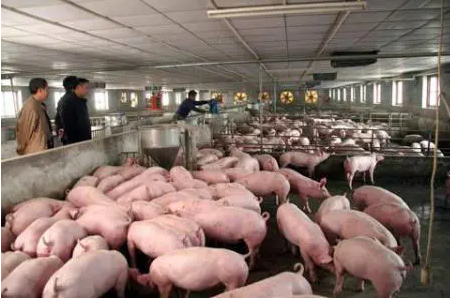
With the development of the breeding industry towards large-scale, intensive and modernized directions, the breeding environment has become a prominent problem. The waste from farms not only has a negative impact on the livestock and poultry themselves, but also poses a serious threat to the surrounding environment. Therefore, it is necessary for livestock and poultry farms to effectively monitor the composition of harmful gases in the environment.
Studies have shown that livestock and poultry breeding is a major source of ammonia emissions. After reacting with the oxidation products of sulfur dioxide and nitrogen oxides, this ammonia generates ammonium nitrate and ammonium sulfate, which are important sources of PM2.5. It is reported that ammonia comes from the feces and urine excreted by livestock and poultry. If it is discharged arbitrarily, it will cause serious harm to the environment. Therefore, it must be recycled and reused to consume the biomass in the feces and urine as much as possible, so as to reduce environmental risks to the greatest extent.
The harmful gases produced in farms, such as ammonia, hydrogen sulfide, and carbon dioxide, not only affect the health of livestock and poultry themselves, but also have a significant impact on the human environment, among which ammonia is the most prominent. Therefore, the hazards and pollution of ammonia in livestock and poultry production should receive further attention. It is necessary to establish systematic and scientific standard ammonia detection technologies for livestock houses, carry out monitoring of ammonia emissions in livestock houses, and grasp the status of ammonia pollution in livestock houses, so as to provide important technical support for energy conservation, emission reduction and efficient production.
The large-scale development of the breeding industry has continuously increased the breeding density, leading to an increase in ammonia emissions per unit area. If the smell of ammonia can be detected but it does not irritate the eyes or nose, its concentration is roughly around 15–20 ppm; when a pungent smell and tearing are felt, the concentration is roughly between 30–40 ppm; when difficulty in breathing and inability to open eyes occur, the concentration can reach more than 70 ppm. After ammonia enters the blood, it reduces the oxygen solubility of the blood and the resistance of livestock and poultry. Long-term exposure to an ammonia concentration of 10–15 mg/kg will significantly reduce the stress resistance of animals.
The aqueous solution of ammonia is alkaline and irritating to mucous membranes, which can cause eye tearing, burning pain, inflammation of the cornea and conjunctiva, and visual impairment. High concentrations of ammonia can cause symptoms such as coughing, pulmonary edema, hemorrhage, and suffocation. In addition, ammonia can increase the pH value of respiratory mucus, making cilia lose their activity function and unable to discharge filtered harmful substances out of the body, thus increasing susceptibility to air-borne diseases. When the ammonia concentration in pig houses reaches 65 ppm, animals begin to suffer from respiratory diseases; at 75 ppm, allergic rhinitis occurs, and the incidence rates of both diseases rise sharply as the ammonia concentration increases.
High concentrations of intestinal ammonia can stimulate the intestinal mucosa and accelerate its growth and metabolism rate. This will lead to an increase in the demand for oxygen and energy. At the same time, the excess ammonia in the intestines is absorbed into the blood, and then converted into amino acids and excretory wastes. The process of metabolizing these ammonia is highly energy-consuming, so the energy used by animals for growth and production is correspondingly reduced, thereby affecting growth performance. When the environmental ammonia concentration is 50 ppm, the weight gain rate of animals decreases by 12%; at 80 ppm, it decreases by 30%.
At present, the ammonia content in livestock houses is at least 10–30 ppm and up to 100 ppm. The national pollution-free breeding standard stipulates that the ammonia concentration in pig houses should be 25 mg/m³. Therefore, how to reduce ammonia emissions has become a key control point for the profitability of the breeding industry. For this reason, intelligent breeding has been introduced now, which uses systematic methods to control the breeding environment and create a suitable growth environment.
Aiming at the long-term presence of gases such as ammonia and hydrogen sulfide in breeding sites,
Shenzhen Wuliang Sensor Technology Co., Ltd. provides various gas sensor solutions, which can timely and accurately monitor the gases in the environment of breeding sites, realizing high-efficiency and high-profit breeding.