
Ammonia is called "ammonia gas" in its gaseous state, with the chemical formula NH₃. Ammonia water has a certain corrosive effect, and carbonated ammonia water is even more corrosive, which can easily damage equipment such as pipelines and valves, leading to ammonia leakage.
Ammonia can burn the mucous membranes of the skin, eyes, and respiratory organs. Excessive inhalation can cause pulmonary edema and even death.
The explosion limit of ammonia gas is 16%–25% (the easily ignitable concentration is 17%).
Ammonia is highly soluble in water, with 1 volume of water dissolving 700 volumes of ammonia gas (hence, spray devices are generally installed in related equipment).
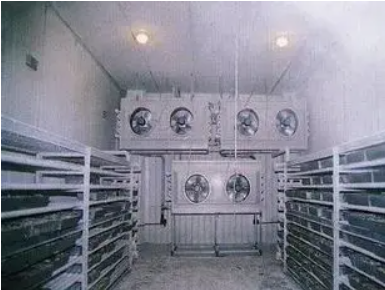
Inapplicability of traditional detectors: Traditional fire detectors are not suitable for installation inside cold storage. The extremely low temperature inside cold storage can cause detectors to frost or malfunction.
Numerous fire hazards: Electrical or mechanical failures of refrigeration equipment, cargo transmission equipment, lighting equipment, etc. Cold storage is filled with polystyrene foam insulation materials, plastic packaging materials, and wooden pallets. The ultra-low temperature inside cold storage makes the plastic sheaths of cables brittle and prone to damage over time, which may further cause short circuits and combustion. In addition, the air inside cold storage is extremely dry, leading to rapid spread of fire once it breaks out.
Difficulty in fire fighting: The enclosed space of cold storage traps smoke for a long time. Fires spread rapidly along insulation materials. The large internal space and numerous shelves make it hard for water guns to cool and extinguish the fire source effectively.
Ammonia leakage alarms are mainly installed in compressors, liquid ammonia storage areas, and liquid ammonia gasification areas.
Liquid ammonia storage stations are equipped with unloading compressors, ammonia storage tanks, liquid ammonia supply pumps, liquid ammonia evaporation tanks, ammonia buffer tanks (pressure stabilizing tanks), ammonia dilution tanks, and other equipment.
Ammonia leakage alarms need to be installed on ammonia storage tanks, liquid ammonia supply pumps, liquid ammonia evaporation tanks, ammonia buffer tanks (pressure stabilizing tanks), ammonia dilution tanks, and other equipment.
In particular, ammonia storage tanks must be equipped with both ammonia leakage alarms and spray devices. When the system detects that the temperature of the on-site ammonia tank exceeds 28°C or the pressure exceeds 1.8 MPa, it will determine that there is an ammonia leakage risk or a leakage has already occurred, and then activate the spray devices to reduce the danger. The gas alarm system is connected to the industrial DCS through the 4-20mA output of the controller, allowing remote monitoring of on-site ammonia leakage via computers, and the DCS can also be programmed to activate the spray system. Meanwhile, the ammonia leakage alarm is connected to the fire protection system through alarm output relays. The spray devices can be activated in case of either fire or severe gas leakage, as shown in the figure.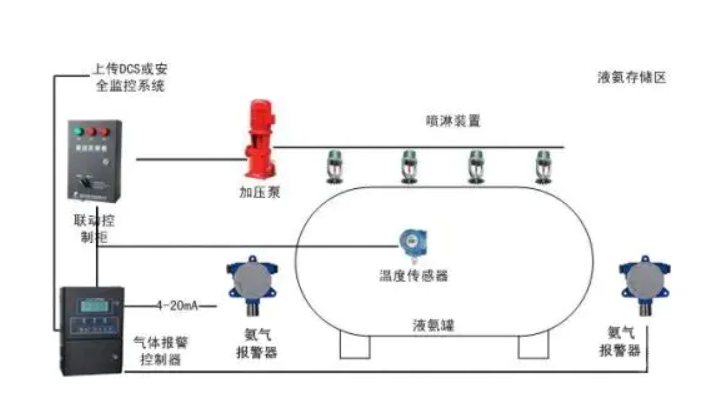
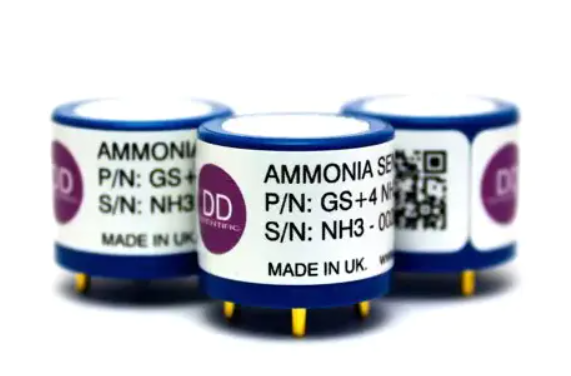
Measuring range: 0-300ppm
Overload capacity: 500ppm
High stability
Strong environmental adaptability