With the rapid development of industrial production and enterprises, industrial waste gas emission pollution has become a prominent environmental issue in China. Currently, waste gas is a major source of air pollutants. The massive discharge of industrial waste gas into the atmosphere degrades the quality of the atmospheric environment, poses severe hazards to human health, and causes substantial losses to the national economy.
In recent years, factories have attached increasing importance to the monitoring of toxic gases during the production process of the chemical industry. Nitrogen dioxide (NO₂) is an important industrial gas, which can be used as a disinfectant in industrial water treatment, as well as for the bleaching of pulp and fibers, the refining of flour, oils and fats, and sugar, and the depilation of leather, among other applications. Meanwhile, nitrogen dioxide is one of the toxic gases, characterized by a reddish-brown color, paramagnetism, a pungent odor, and high solubility in water. A low concentration of nitrogen dioxide (4 ppm) can cause nasal paralysis, which may lead to excessive inhalation. Long-term exposure to an environment with an NO₂ concentration ranging from 40 to 100 mg/m³ will severely affect health. Therefore, in order to prevent nitrogen dioxide from endangering the health of workers and disrupting production, real-time monitoring of nitrogen dioxide gas in factories is essential.
Instruments used for NO₂ monitoring mainly include analytical instruments based on optical methods such as the Saltzman method and chemiluminescence method. Although these instruments can provide accurate analytical data, most of them are large-scale analytical instruments with high operating costs and require daily maintenance, making them unsuitable for indoor monitoring in factories and similar settings. Currently, a more commonly used method is the adoption of electrochemical NO₂ gas sensors. NO₂ sensors feature advantages such as small size and low cost, enabling simple and rapid monitoring of NO₂ concentration in the environment, and successfully realizing the automation and miniaturization of monitoring instruments.
An industrialized society has brought about the rapid development of science and technology, but it has also given rise to serious environmental problems, such as air pollution. We breathe air every minute and every second, and air quality has a profound impact on our health. However, due to the emission of automobile exhaust and industrial waste gas, the released waste gas is directly discharged into the air, causing air pollution and leading to the emergence of various health problems. This makes the development of low-cost, high-efficiency, and high-sensitivity sensors for detecting polluting gases in the air particularly urgent.
Industrial waste gas refers to the general term for various pollutant-containing gases emitted into the air during fuel combustion and production processes within enterprise factory areas. These waste gases include carbides, sulfides, fluorides, nitrogen oxides, and soot, among others. These harmful gases enter the human body through the respiratory tract in different ways. Some of them cause direct harm to the human body, while others have a cumulative effect, which will pose more serious risks to human health. Different substances exert different impacts.
Industrial waste gas purification refers to the work of pre-treating the waste gas generated in industrial sites such as factories and workshops, and then discharging it in compliance with national waste gas emission standards. The purified waste gas usually needs to be tested to ensure that it meets the emission standards.
At present, most online industrial waste gas monitoring systems on the market adopt a one-to-one measurement method to simultaneously measure industrial waste gas containing various gas components. However, industrial waste gas contains a large number of gas components, and an online industrial waste gas monitoring system can only monitor one type of gas with a single instrument. When monitoring various gases in complex gas mixtures, it is necessary to install various types of instruments for simultaneous monitoring. The one-to-one instrument monitoring method not only wastes costs and space but also increases the workload of monitoring personnel in maintaining each instrument.
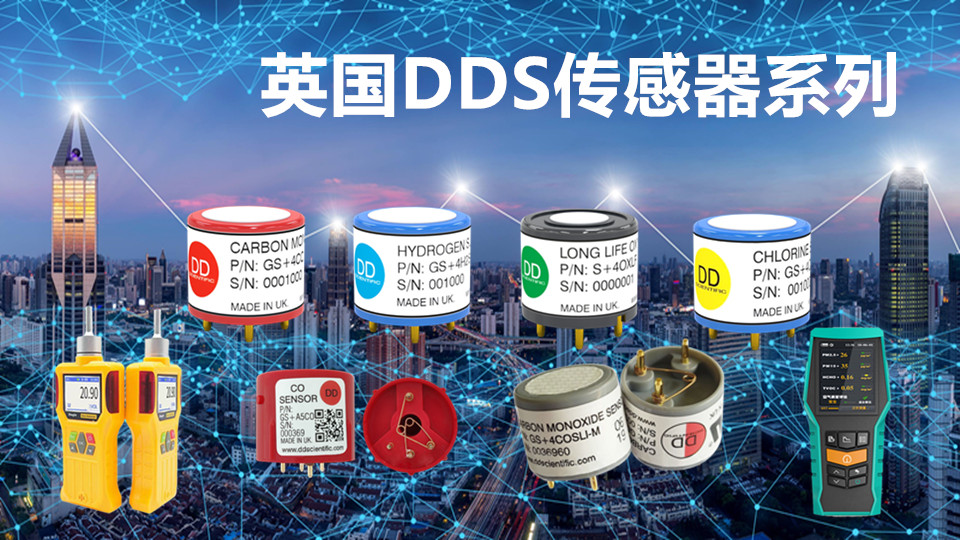
The UK-based
DDS NO₂ sensors distributed by Shenzhen Sandate Technology Co., Ltd. include the standard Series 4/7 for industrial leakage monitoring, as well as Series 3 and Series 5 products for emission monitoring, which can provide reliable guarantees for users and the industrial sector.