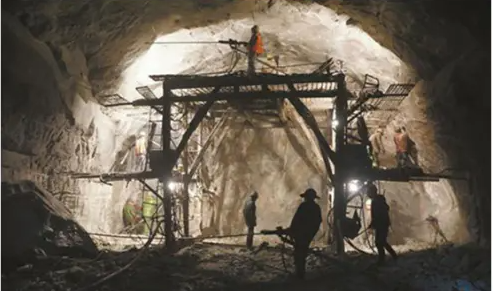
Que'er Mountain is a must-pass point on National Highway 317, the vital transportation artery linking Sichuan and Tibet. The Que'er Mountain Tunnel Project, situated between Garzê Prefecture and Gangtuo in Dege County, serves as a key project for traversing Que'er Mountain. It is also the world's first ultra-long highway tunnel constructed at an altitude of over 4,300 meters. The project comprises two major components: the tunnel and the approach roads. Stretching 7 kilometers in length with two bidirectional lanes, the tunnel has a total investment of 1.15 billion yuan and is capable of accommodating a daily large vehicle flow of 5,000 units.
For a long time, Que'er Mountain had been a "bottleneck" on this vital transportation route. At normal driving speeds, it took more than an hour to cross the mountain. In winter, after the road surface froze, the crossing time could extend to nearly 3 hours. Once traffic control was implemented, this lifeline would be completely cut off. On November 10th, this situation was finally changed. After over a decade of scientific research and 5 years of arduous construction, the 7,079-meter-long Que'er Mountain Tunnel was officially fully connected. If the subsequent construction proceeded smoothly, it would be open to traffic by the end of 2017, completely eliminating the long-standing traffic bottleneck and opening up an economic artery for poverty-stricken counties such as Dege.
The significance of the Que'er Mountain Tunnel is self-evident. Nevertheless, to carry out construction smoothly in a region characterized by high altitude and an average annual temperature of minus 18 degrees Celsius, the foremost challenge to address was oxygen supply. Because once oxygen became scarce, not only would workers struggle to perform their tasks efficiently, but even machinery might fail to operate properly. "The oxygen concentration inside the tunnel is estimated to be only about half of that in the Chengdu Plain," stated the relevant person in charge of Southwest Research Institute, who participated in the tunnel's scientific research and development. As early as 2004, the institute had launched research on the major project themed "Study on Construction Technology of Extra-Long Tunnels under High-Altitude, Low-Temperature, Low-Pressure and Hypoxic Conditions".
How was the problem of oxygen deficiency resolved? To tackle this issue, the construction unit specially built an oxygen station outside the tunnel, which could continuously supply oxygen into the tunnel through a large-diameter pipeline. Even so, the actual operation was far more complicated than expected. In August this year, members of the research team conducted another investigation and exploration trip to Que'er Mountain. The scene at that time left a profound impression on Zhang Bojin, a technical staff member from Southwest Research Institute. He recounted that the roads winding through Que'er Mountain required drivers to stay fully focused. Although the scenery outside the window was breathtaking, as the altitude climbed steadily, the excitement of admiring the beautiful views was gradually replaced by discomforts such as shortness of breath and chest tightness. "We already felt this way just being on the mountain, and the conditions inside the tunnel were even worse," Zhang said. Although the oxygen supply issue inside the tunnel had been addressed, new employees still needed time to acclimatize to plateau construction work, having to go to the infirmary outside the tunnel entrance every few hours to inhale oxygen. In fact, to speed up the construction progress, some workers even entered the tunnel carrying oxygen cylinders on their backs. "They would work inside for a while, then come out to take a few breaths of oxygen. It's hard for those who haven't experienced it to imagine how tough that scene was."
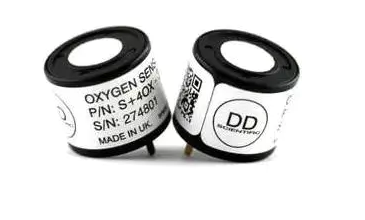
In the high-altitude tunnel environment, excessively low oxygen concentration can lead to chest tightness and shortness of breath. Conversely, the oxygen station built to pump oxygen into the tunnel may cause an overly high oxygen concentration, which can result in oxygen poisoning. Therefore, real-time monitoring of oxygen concentration is imperative. Electrochemical oxygen sensors can effectively address this problem.
Product Introduction
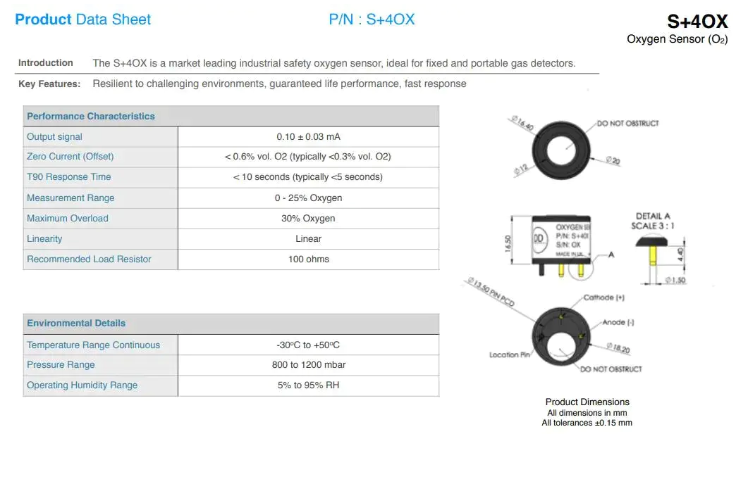
Boasting a 2-year service life, the Series 4 Oxygen Sensor (S+4OX) is one of the best-selling gas sensors of
Shenzhen Wuliang Sensor Technology Co., Ltd. It is primarily designed for measuring oxygen concentration in the ambient environment. There are multiple models of oxygen sensors available, differentiated by varying measurement ranges and operating lifespans. The S+4OX Oxygen Sensor features a rugged and stable design, delivering superior performance.
It is widely applied in oxygen alarms and atmosphere analyzers, and is extensively used across industries including coal mining, steel manufacturing, petrochemical engineering, automotive, and medical care.