Continuous Emission Monitoring Systems (CEMS) are mainly used for the continuous monitoring of various industrial waste gas sources, such as thermal power plants, waste incineration plants, coal and petrochemical factories, paper mills and other industries.
With the increasingly prominent problem of air pollution, governments have paid greater attention to the supervision of waste gas emissions from factories and enterprises. The monitoring of a factory's flue gas emissions and the judgment of whether they meet emission standards all rely on CEMS. CEMS has two important objectives: to detect the concentration of solid particulate matter and the content of polluting gases respectively. Among these gases, sulfur dioxide (SO₂) is a highly hazardous gas to the environment, which requires measurement by sulfur dioxide sensors.
CEMS is mainly composed of a gaseous pollutant monitoring subsystem, a particulate matter concentration monitoring subsystem, an emission flow parameter monitoring subsystem, and a data acquisition, processing and communication system. The monitoring of SO₂ content here belongs to the gaseous pollutant monitoring subsystem. By measuring the SO₂ in the treated waste gas, the sulfur dioxide gas sensor determines whether the emission content meets the requirements and whether further desulfurization treatment is needed. Meanwhile, the measured values of the sulfur dioxide gas sensor provide data support for any potential further treatment and can help improve desulfurization efficiency.
Shenzhen Wuliang Sensor Technology Co., Ltd. recommends GS+4SO₂, a high-resolution sulfur dioxide sensor that can detect SO₂ gas at 20 ppm, making it ideal for ambient air quality monitoring systems and instruments.
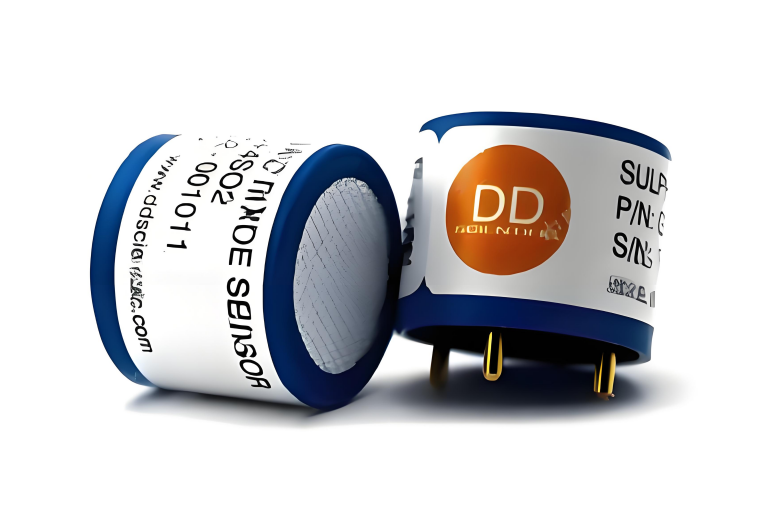
Sensitivity: 500 ± 100 nA / ppm
T90 response time: < 30 seconds
Measuring range: 0 - 20 ppm
Maximum overload: 150 ppm
Linear range: 20±5% ppm