Application Solutions of Sensors in the Petrochemical Industry
I. Background of the Petrochemical Industry

The petrochemical industry is an important component of the chemical industry and one of the key pillar industries in China. At present, the global consumption of oil and natural gas accounts for about 60% of the total energy consumption. Initially, due to the large consumption of coal in China, the consumption of oil was less than 20%. However, with the development of the national economy, the consumption of oil has been increasing year by year. In recent years, China has carried out large-scale construction of oil and gas import pipelines, ensuring the smooth import of oil and gas resources and laying a solid foundation for the development of the petrochemical industry.
The energy provided by the petrochemical industry is mainly used as fuel for automobiles, tractors, aircraft, ships and boilers. Meanwhile, refining and chemical enterprises supply various chemical raw materials for the chemical industry. With the construction of the West-East Natural Gas Transmission Project, more natural gas has entered thousands of households. It can be said that the petrochemical industry has penetrated into all walks of life in the country, mainly including exploration, exploitation, refining and chemical processing, storage, transportation and other sectors.
To ensure the safety of production, processing, transportation and usage, it is necessary to detect and monitor gas pressure, gas leakage explosion protection, various toxic leakages and other aspects in each link. At the same time, relevant national authorities have formulated corresponding monitoring standards, and entrusted fire research institutes to promote, accept and inspect these standards.
II. Significance of the Petrochemical Industry
1. The Petrochemical Industry is a Major Supplier of Energy
The petrochemical industry, mainly referring to gasoline, kerosene, diesel, heavy oil and natural gas produced by petroleum refining, is the primary supplier of major energy sources at present. In 1995, China produced 80 million tons of fuel oil. Currently, the global consumption of oil and natural gas accounts for about 60% of the total energy consumption; due to the large consumption of coal in China, the consumption of oil is less than 20%. The energy provided by the petrochemical industry is mainly used as fuel for automobiles, tractors, aircraft, ships and boilers, with a small amount used as civil fuel. Energy is a restrictive factor for the development of China's national economy. The petrochemical industry consumes about 8.5% of the total energy, so efforts should be made to continuously reduce energy consumption.
2. The Petrochemical Industry is One of the Pillars of the Materials Industry
Metallic materials, inorganic non-metallic materials and polymer synthetic materials are known as the three major materials. The global output of polymer synthetic materials provided by the petrochemical industry is currently about 145 million tons, and in 1996, China's output exceeded 8 million tons. In addition to synthetic materials, the petrochemical industry also supplies the vast majority of organic chemical raw materials. Within the scope of the chemical industry, except for chemical products provided by chemical minerals, raw materials produced by the petrochemical industry play an important role in various sectors.
3. The Petrochemical Industry Promotes Agricultural Development
Agriculture is the basic industry of China's national economy. Nitrogen fertilizers provided by the petrochemical industry account for 80% of the total fertilizer output. The popularization and application of agricultural plastic films, coupled with the rational use of pesticides and various fuels required by a large number of agricultural machinery, have made the petrochemical industry a main force supporting agriculture.
4. All Industrial Sectors are Indispensable to Petrochemical Products
The development of the modern transportation industry is closely related to fuel supply. It is no exaggeration to say that without fuel, there would be no modern transportation industry. Metal processing and various machinery all need various lubricating materials and other supporting materials, consuming a large number of petrochemical products. The global output of lubricating oils and greases is about 20 million tons, and China's output is about 1.8 million tons. The building materials industry is a new field for petrochemical products, such as plastic pipes, doors and windows, flooring materials and coatings, which are known as chemical building materials. The light industry and textile industry are traditional users of petrochemical products. The development and promotion of new materials, new processes and new products are all inseparable from petrochemical products. At present, the rapidly developing electronic industry and many high-tech industries put forward new requirements for petrochemical products, especially fine chemical products produced from petrochemical raw materials, which greatly promotes the development of the petrochemical industry.
III. Application Occasions and Areas in the Petrochemical Industry
According to industry and relevant national standards, the application of gas detection in the petrochemical industry is mainly concentrated in the following areas:
1) Combustible gas detection and alarm devices should be installed in the following places:
a. Oil pump houses above crude oil transfer stations, metering rooms, oily sewage pump houses, valve group rooms and dehydrator operation rooms;b. Compressor houses for natural gas transmission, metering rooms, valve group rooms and pigging receiving and launching rooms;c. Compressor houses for light hydrocarbon systems, metering rooms, valve group rooms, pigging receiving and launching rooms, tank farms and loading/unloading facilities;d. Pump rooms for condensate oil and gasoline, metering rooms, valve group rooms, tank farms and loading/unloading facilities;e. Liquefied petroleum gas pump houses, bottling (filling) rooms, metering rooms, gas cylinder warehouses and tank farms;
2) The Oil Industry Hot Work Safety Code (SY/T5858-2004) also clearly stipulates:
a. For all tanks, vessels and other equipment requiring hot work, internal and surrounding environmental gas analysis shall be carried out. The gas analysis shall include combustible gas concentration, toxic and harmful gas detection, oxygen and nitrogen concentration detection and analysis. The analysis report shall be attached to the industrial hot work application report.b. During hot work construction, the concentration of combustible gas in the air at the hot work point and operation area shall be lower than 25% of its lower explosive limit. If forced ventilation measures are adopted, the ventilation direction shall be consistent with the natural wind direction.c. During the whole process of hot work construction, the hot work supervisor shall track and detect the concentration of combustible gas.d. Before entering equipment, facilities and oil tanks for hot work, gas detection and re-inspection shall be conducted, and entry is allowed only after passing the test.
At present, gas detection and analysis methods are widely used to control toxic gases in the petroleum production process. Among them, gas sensors for carbon monoxide, hydrogen sulfide, sulfur dioxide and other gases are widely used in the petrochemical production process in the form of independent portable detectors, gas detection systems, flue gas analysis systems, etc. On average, about 20 gas sensors are needed for the production of every 10,000 tons of refined oil products. Based on the current annual output of 220 million tons of refined oil products, the annual demand for gas sensors is about 500,000 units.
In the whole process of production, processing, transportation and usage, it is necessary to detect toxic gases such as carbon monoxide, sulfur dioxide, hydrogen sulfide, ammonia, ethylene oxide, propylene, vinyl chloride, acetylene, as well as organic vapors such as benzene, aldehydes and ketones, which requires a large number of gas sensors to be applied in safety protection to prevent poisoning and explosion accidents.
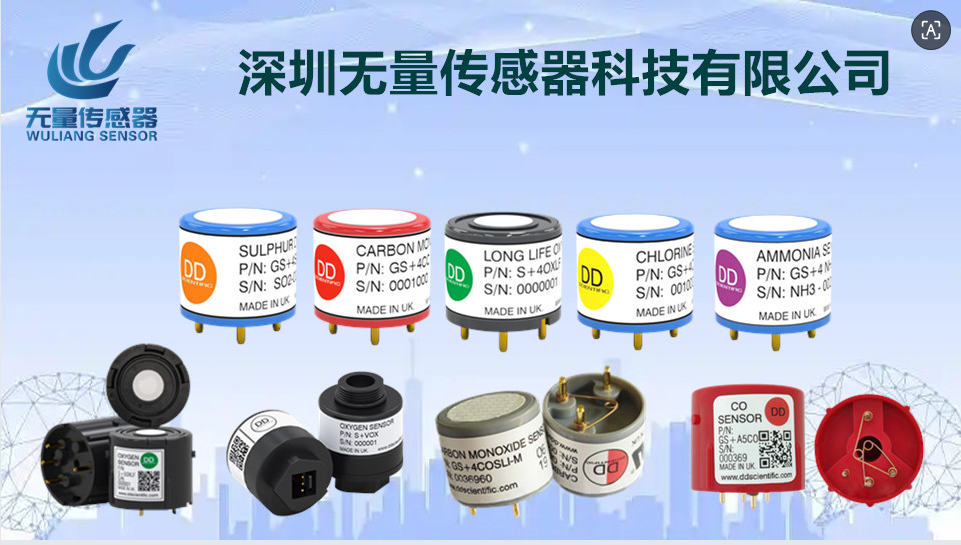
Electrochemical Gas Sensors Series
We have a rich product line of
gas sensors, including those for common gas detection in coal mines, such as CO, SO₂, H₂S, NO₂, NO, Cl₂, NH₃, etc. Each type of gas sensor has different ranges and sizes to choose from. Meanwhile, electrochemical sensors have the advantages of low power consumption, high precision, high sensitivity, wide linear range, strong anti-interference ability, and excellent repeatability and stability.