Sensors are basic products in the electronic information equipment manufacturing industry, and are special components among the new-type electronic components that are prioritized for development. As a high-tech industry with promising prospects, sensor technology features high technological content, good economic benefits, and strong penetration capability, boasting enormous development potential in fields such as industrial production, smart homes, and environmental protection.
With the gradual arrival of the intelligent era, sensors have become increasingly irreplaceable. Miniaturized, digitalized, and intelligent sensors are rapidly gaining popularity, thereby transforming our lifestyles. Recently, a number of advanced sensor devices have emerged in the instrument and meter market, refreshing the market application system.
In the informationized 21st century, we cannot do without sensors. Sensors have an extremely wide range of applications, including electronic computers, production automation, modern information,
national defense, transportation, chemistry, environmental protection, energy, marine development, remote sensing, aerospace, and so on. Below is a brief introduction to some commonly used sensors.
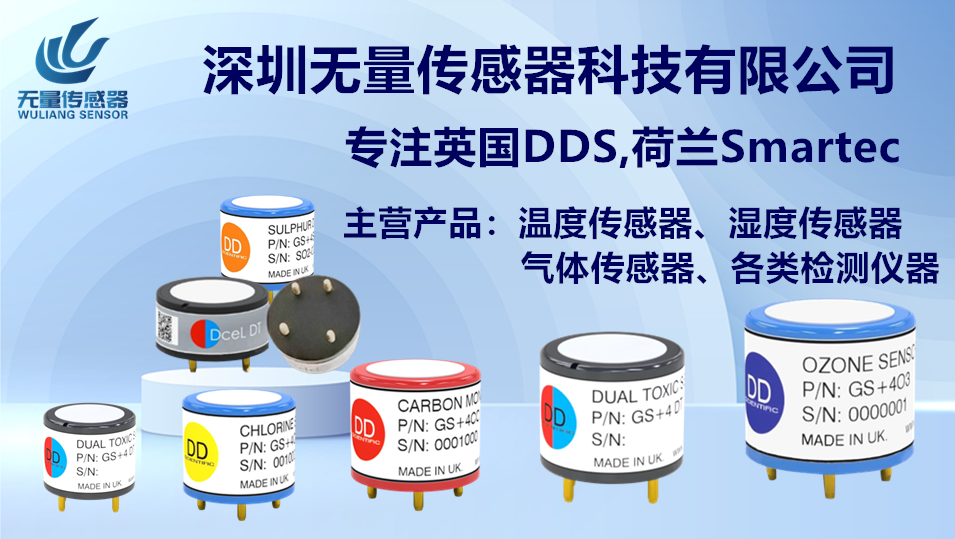
At present, global air pollution, water contamination, and noise have severely damaged the Earth's ecological balance and the living environment on which we depend. This situation has attracted the attention of countries around the world. To protect the environment, various environmental monitoring instruments made with sensors are playing an active role. Environmental monitoring is closely related to people's daily lives, and it is also a major application area for gas sensors. For example, some toxic and harmful gases in the air, such as carbon monoxide, sulfur dioxide, formaldehyde, and PM2.5, pose a serious threat to people's health. In such cases, corresponding gas sensors are needed to monitor ambient air quality.
Currently, the application of sensors in automobiles includes the measurement of parameters such as driving speed, driving distance, engine speed, and fuel remaining. Due to the increasing number of automobile traffic accidents and the environmental hazards caused by automobiles, sensors have been practically applied in a number of new systems, such as automobile airbag systems, anti-theft devices, anti-skid control systems, anti-lock braking systems, electronic transmission control devices, exhaust gas recirculation devices, electronic fuel injection systems, and automobile "black boxes". It can be predicted that with the development of automotive electronic technology and automotive safety technology, the application of sensors in the automotive field will become even more extensive.
Sensors are widely used in modern household appliances. They have found extensive applications in electric stoves, automatic rice cookers, vacuum cleaners, air conditioners, electric water heaters, hot air heaters, air dryers, alarms, electric irons, electric fans, game consoles, electronic mosquito repellers, washing machines, dishwashers, cameras, refrigerators, color televisions, video recorders, tape recorders, radios, record players, and home theaters, among others.
With the continuous improvement of people's living standards, there is an extremely strong demand for enhancing the functions and automation level of household appliances. To meet these demands, it is first necessary to use high-precision sensors capable of detecting analog quantities to obtain accurate control information, which is then processed by microcomputers for control. This makes the use of household appliances more convenient, safe, and reliable, while reducing energy consumption and creating a comfortable living environment for more families. At present, the blueprint for home automation is under design. In the future, homes will be equipped with microcomputers as central control units, which will use various sensors to monitor various household conditions on behalf of humans and perform various control operations through control equipment. The main components of home automation include: security monitoring and alarm systems, air conditioning and lighting control, energy consumption control, automatic solar tracking, household chore automation, and personal health management. The realization of home automation will allow people to have more time for study, education, rest, and entertainment.
At present, robots have been gradually adopted to replace human labor in workplaces with high labor intensity or dangerous operations. Robots are also well-suited for undertaking high-speed and high-precision tasks. However, most of these robots are single-function automated mechanical robots used for processing, assembly, inspection, and other production-related work, and only equipped with sensors that detect the position and angle of their arms. To make robots more functionally similar to humans and enable them to perform more advanced tasks, robots need to be equipped with object detection sensors, especially visual sensors and tactile sensors. These sensors allow robots to identify and detect objects through vision, and generate sensations of pressure, force, slip, and weight through touch. Such robots are called intelligent robots. They can not only perform special tasks but also handle general production, office, and household chores.
With the development of medical electronics, the era when diagnosis relied solely on doctors' experience and intuition will come to an end. Today, medical sensors can be used for high-precision diagnosis of human body surface and internal temperature, blood pressure and intracavitary pressure, blood and respiratory flow, tumors, blood analysis, pulse waves, heart sounds, electrocardiograms, electroencephalograms, and other parameters. Obviously, sensors play a very important role in promoting the advanced development of medical technology.
To improve the health level of domestic residents, the reform of China's medical system will expand the scope of medical services to the entire population. In the past, medical work was only centered on patients. In the future, medical work will play a role in a wide range of areas, including early diagnosis of diseases, early treatment, remote diagnosis, and the development of artificial organs, and sensors will find increasing applications in these fields.
In the industrial sector, the British DDS gas sensors represented by Shenzhen Sandate are mainly used in the petrochemical industry. A variety of sensors, such as
oxygen sensors, hydrogen sulfide sensors, and carbon monoxide sensors, can be used for detecting various harmful gases. In addition, they can be used to detect highly toxic gases such as organic solvents and phosphine in the semiconductor and microelectronics industries. In the electric power industry, hydrogen sensors can detect hydrogen produced during the deterioration of transformer oil. In the food industry, gas sensors can also be used to detect the freshness of perishable foods such as meat. In the application of fruit and vegetable preservation, gas sensors are used to detect the concentrations of oxygen, ethylene, and carbon dioxide in preservation warehouses to ensure the freshness
of fruits and vegetables. There is also a wide demand for sensors in the automotive and kiln industries for detecting oxygen in exhaust gas, and in highway transportation for detecting the concentration of ethanol in drivers' exhaled breath.
At present, sensors have been widely used in various fields of production, daily life, and scientific research, covering environmental protection, transportation, home life, space exploration, and many other aspects. A sensor is a component that converts non-electrical physical quantities (such as speed, displacement, pressure, temperature, humidity, flow rate, sound intensity, and illuminance) into electrical quantities (such as voltage, current, resistance, and capacitance) that are easy to measure, transmit, and process. Sensors are usually defined as "devices that provide effective electrical signal output corresponding to specific measured physical quantities". For example, photoelectric sensors use photoresistors to convert optical signals into electrical signals; thermoelectric sensors use thermistors to convert thermal signals into electrical signals; capacitive sensors can convert non-electrical signals such as angle, concentration, pressure, and displacement into electrical signals; force-electric sensors use sensitive elements to convert mechanical signals such as speed and acceleration into electrical signals such as current and voltage.
In civilian applications, gas sensors are mainly used for detecting leaks of civil gases such as natural gas, liquefied petroleum gas, and city gas in kitchens, and for detecting gases generated during food cooking in microwave ovens to automatically control the cooking process.
Specifically, the civilian applications of British DDS gas sensors represented by Shenzhen Sandate are mainly reflected in the following aspects: In kitchens, they detect leaks of civil gases such as natural gas, liquefied petroleum gas, and city gas, and automatically control the cooking process of microwave ovens by detecting gases generated during food cooking; In residential buildings, office buildings, conference rooms, and public entertainment venues, carbon monoxide sensors, smoke sensors, ozone sensors, and other sensors are used to control the automatic operation of air purifiers or electric fans; In some high-rise buildings, gas sensors can also be used to detect fire signs and trigger alarms.
Nowadays, sensors have integrated into every corner of life. They can analyze users' daily behaviors and increase the ways users interact with the surrounding world, such as the commonly used motion sensors and temperature-humidity sensors. The use of these common intelligent sensors can greatly improve the convenience and safety of life. With the development of the petrochemical industry, the types and application scope of flammable, explosive, and toxic gases have increased. Once these gases leak during production, transportation, or use, they may cause poisoning, fires, or even explosions, seriously endangering people's lives and property safety.
As an important type of gas detector, gas sensors have achieved significant development in recent years. The advancement of gas sensor technology has led to their increasingly widespread applications.