Automatic Alarm and Prediction of Carbon Monoxide Sensors in Household Gas and Fire Accidents
In recent years, gas cylinders have been gradually replaced by pipeline natural gas, but they are still widely used in some rental housing and restaurants. Although gas cylinders have the characteristics of flexibility, convenience and low cost, they are highly dangerous. Gas is easy to use—igniting with a simple spark—but improper installation or use can lead to explosions, fires and poisoning incidents. Firefighters remind that precautions must be taken in gas usage, because even a minor oversight may trigger an accident that results in the loss of lives and homes.
At around 11:00 a.m. on October 13th, a gas explosion occurred at a snack bar on Xinyang Road, Ehu Town, Xishan District, Wuxi City. Preliminary judgment indicated that it was likely caused by a gas leak. By 5:00 p.m. the same day, the accident had killed 9 people and injured 10 others. After the incident, it immediately became a hot news topic, and also made many people concerned about the safety of kitchen gas around them.
In the early stage of a fire, carbon monoxide (CO) is produced. Inhalation of CO initially causes symptoms such as dizziness and blurred vision, and in more severe cases, even fainting. When CO enters the human body, it binds to hemoglobin in the blood, thereby preventing hemoglobin from combining with oxygen, which causes hypoxia in body tissues and leads to suffocation and death. Therefore, it is crucial that CO sensors are applied in fire alarms to transmit real-time data on CO concentrations in buildings to fire control centers for guiding fire rescue operations.
The GS+4CO2H, an imported British DDS electrochemical CO sensor with high hydrogen resistance, is a core product of Shenzhen Wuliang Sensor Technology Co., Ltd. It is designed for measuring CO gas in environments with high hydrogen content, and is widely used in steel plants, chemical industry, civil applications and other fields. The CO sensor can detect extremely low concentrations of CO. Meanwhile, it uses a photoelectric sensor to detect visible smoke particles. By examining the ratio and correlation of data received from these two sensors and applying specific fire detection algorithms, the sensitivity of fire detection can be greatly improved.
image.png
In recent years, gas cylinders have been gradually replaced by pipeline natural gas, but they are still widely used in some rental housing and restaurants. Although gas cylinders have the characteristics of flexibility, convenience and low cost, they are highly dangerous. Gas is easy to use—igniting with a simple spark—but improper installation or use can lead to explosions, fires and poisoning incidents. Firefighters remind that precautions must be taken in gas usage, because even a minor oversight may trigger an accident that results in the loss of lives and homes.
At around 11:00 a.m. on October 13th, a gas explosion occurred at a snack bar on Xinyang Road, Ehu Town, Xishan District, Wuxi City. Preliminary judgment indicated that it was likely caused by a gas leak. By 5:00 p.m. the same day, the accident had killed 9 people and injured 10 others. After the incident, it immediately became a hot news topic, and also made many people concerned about the safety of kitchen gas around them.
In the early stage of a fire, carbon monoxide (CO) is produced. Inhalation of CO initially causes symptoms such as dizziness and blurred vision, and in more severe cases, even fainting. When CO enters the human body, it binds to hemoglobin in the blood, thereby preventing hemoglobin from combining with oxygen, which causes hypoxia in body tissues and leads to suffocation and death. Therefore, it is crucial that CO sensors are applied in fire alarms to transmit real-time data on CO concentrations in buildings to fire control centers for guiding fire rescue operations.
The
GS+4CO2H, an imported British DDS electrochemical CO sensor with high hydrogen resistance, is a core product of Shenzhen Wuliang Sensor Technology Co., Ltd. It is designed for measuring CO gas in environments with high hydrogen content, and is widely used in steel plants, chemical industry, civil applications and other fields. The CO sensor can detect extremely low concentrations of CO. Meanwhile, it uses a photoelectric sensor to detect visible smoke particles. By examining the ratio and correlation of data received from these two sensors and applying specific fire detection algorithms, the sensitivity of fire detection can be greatly improved.
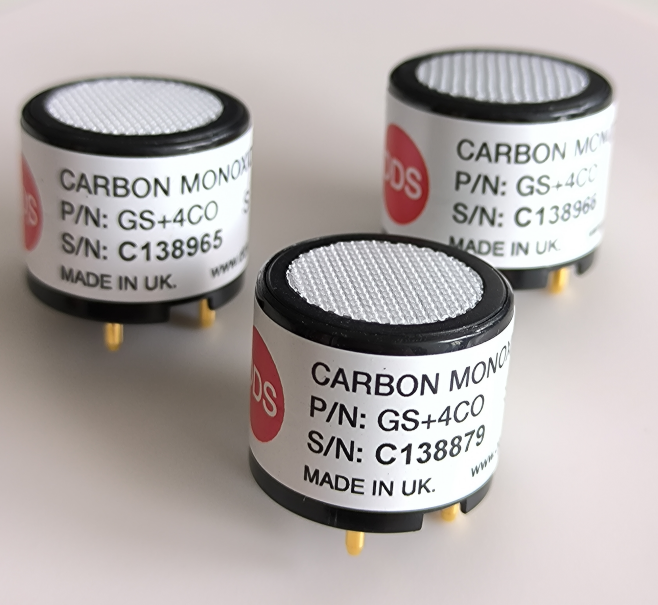
image.png
Features
Measuring range: 0-1000 ppm
Overload capacity: 0-2000 ppm
Cross-sensitivity to hydrogen: < 20%
Cross-sensitivity to alcohol: < 0.25%
High stability
Strong environmental adaptability
Detection PrincipleWhen gas leaks in the environment, and the gas concentration detected by the gas alarm reaches the critical point set for explosion or poisoning alarms, it converts the gas signal into a voltage or current signal and transmits it to the alarm instrument, which then triggers an alarm. The CO sensor detects low-concentration flammable gases in the surrounding environment and transmits the detection signal to a controller or control circuit in analog or digital form. When the flammable gas concentration exceeds the value set in the controller or control circuit, the controller sends an alarm signal or triggers actions such as closing the gas valve through an actuator or executive circuit. On-duty personnel can then take timely safety measures to avoid combustion and explosion accidents.
Carbon monoxide is an invisible, colorless, odorless, non-irritating gas that cannot be detected by human senses. This is why a CO sensor for alarm and prediction is particularly important. In the United States, the Consumer Product Safety Commission (CPSC) recommends that every household should have at least one CO alarm, which is an essential component of your home safety plan.
Features
Measuring range: 0-1000 ppm
Overload capacity: 0-2000 ppm
Cross-sensitivity to hydrogen: < 20%
Cross-sensitivity to alcohol: < 0.25%
High stability
Strong environmental adaptability
Detection PrincipleWhen gas leaks in the environment, and the gas concentration detected by the gas alarm reaches the critical point set for explosion or poisoning alarms, it converts the gas signal into a voltage or current signal and transmits it to the alarm instrument, which then triggers an alarm. The CO sensor detects low-concentration flammable gases in the surrounding environment and transmits the detection signal to a controller or control circuit in analog or digital form. When the flammable gas concentration exceeds the value set in the controller or control circuit, the controller sends an alarm signal or triggers actions such as closing the gas valve through an actuator or executive circuit. On-duty personnel can then take timely safety measures to avoid combustion and explosion accidents.
Carbon monoxide is an invisible, colorless, odorless, non-irritating gas that cannot be detected by human senses. This is why a CO sensor for alarm and prediction is particularly important. In the United States, the Consumer Product Safety Commission (CPSC) recommends that every household should have at least one CO alarm, which is an essential component of your home safety plan.