Carbon Monoxide Alarm CO Gas Sensor for Underground Garages
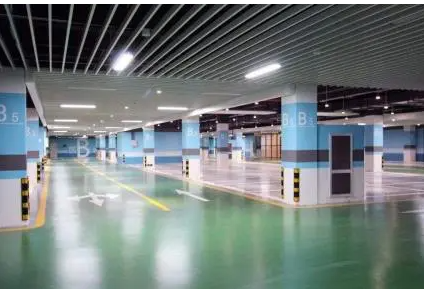
The generation of carbon monoxide in underground garages mainly comes from automobile engines. When the engine is idling, incomplete combustion of gasoline produces exhaust gas containing a large amount of CO. Underground parking lots are enclosed environments with frequent vehicle entry and exit. The emitted exhaust gas is not easy to discharge, making it extremely easy to accumulate a large amount of CO gas. This leads to a pungent odor lingering in the parking lot and endangers human health. Therefore, underground garages and parking lots should be equipped with air supply and exhaust systems to replace the air with fresh air. The long-term CO concentration in underground garages should be kept below 25ppm, and the short-term concentration should not exceed 37.5ppm.
Garage carbon monoxide detectors use carbon monoxide sensors to detect the concentration of CO gas in the air and convert it into electrical signals, where the magnitude of the electrical signal is related to the CO concentration. Carbon monoxide alarms are generally classified by the type of sensor used into semiconductor carbon monoxide alarms, electrochemical carbon monoxide alarms, and infrared carbon monoxide detectors. In terms of measurement sensitivity, accuracy, stability, and resistance to cross-gas interference, infrared carbon monoxide detectors offer the best performance. However, they are relatively expensive and suitable for laboratory use. Semiconductor and electrochemical carbon monoxide alarms are commonly used for civilian purposes.
Semiconductor carbon monoxide alarms adopt semiconductor carbon monoxide sensors as the sensing element. The sensing element requires a constant temperature of around 200℃ to achieve rapid response, so electric heating wires are added for heating, which requires a relatively large current supply. Large variations in temperature, humidity, and even air flow are unfavorable to their measurement. In addition, they are susceptible to cross-interference from other gases such as alcohol, nitrogen oxides, hydrogen, and alkanes, which may cause false alarms. Nevertheless, they are inexpensive and generally have a service life of up to five years.
The S+4 2ECO electrochemical carbon monoxide sensor developed by DDS and produced by
Shenzhen Wuliang Sensor Technology Co., Ltd. is a low-cost sensor that complies with UL2075 certification. It has a CO measurement range of 0–1000ppm and a wide operating temperature range (-20℃ to +50℃), with low sensitivity to interfering gases. Featuring a long service life, excellent long-term stability, and high accuracy, this sensor is one of the few ideal options for digital display applications.
Typical Applications of S+4 2ECO Electrochemical Carbon Monoxide Sensor (CO Sensor)
Residential and commercial carbon monoxide detectors
Industrial carbon monoxide monitoring
Ventilation control for indoor parking lots
Fire alarms