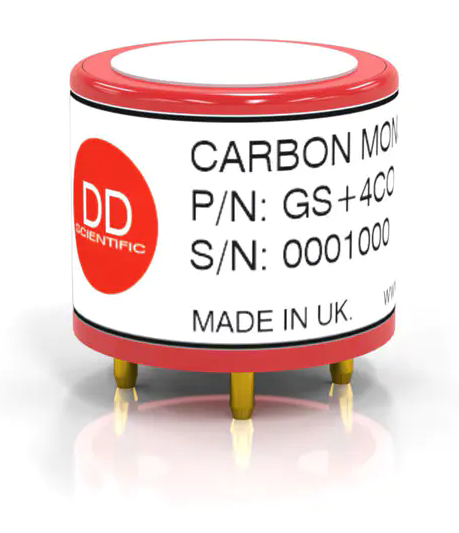
At present, the gas sensor market maintains a vigorous development trend, and more application demands have emerged. Carbon monoxide sensors are among the early-applied types of gas sensors. This is because they are used to detect flammable and explosive gases, and when the human body inhales excessive carbon monoxide, hemoglobin loses its oxygen-carrying capacity, leading to suffocation and even death in severe cases. Therefore, experts have never stopped researching carbon monoxide sensors, resulting in the development of such sensors based on various working principles. Each type of sensor has its own advantages, disadvantages, and suitable application scenarios.
According to their reaction principles, carbon monoxide sensors are mainly divided into the following categories, each with corresponding pros and cons:
Semiconductor Principle
Advantages: Low cost and excellent performance.
Disadvantages: High power consumption, not suitable for battery-powered applications; easily affected by temperature, humidity, air flow, etc.; poor anti-interference ability; high false alarm rate.
Catalytic Combustion Principle
Advantages: Accurate measurement, fast response, and long service life.
Disadvantages: No selectivity within the range of flammable gases; operates with an open flame, posing ignition and explosion risks; most organic vapors containing elements can cause sensor poisoning.
Electrochemical Principle
Advantages: Small size, zero power consumption, high sensitivity, good stability, excellent linearity, repeatable performance, fast response speed, typical resolution up to 1ppm, and long service life.
Disadvantages: Significant differences in price, performance, manufacturing process, anti-interference capability, and temperature/humidity adaptability among different brands.
Non-Dispersive Infrared (NDIR) Principle
Advantages: Wide measurement range, high accuracy, good selectivity, high reliability, no adsorption effect, no poisoning risk, independent of oxygen, less susceptible to environmental interference, and long service life.
Disadvantages: High cost, relatively difficult maintenance, large volume (not suitable for portable instruments), low concentration detection accuracy needs improvement, and not suitable for long-term power supply operation.
Different types of sensors have distinct market applications based on their working principles. For example, in the field of hazardous environment explosion detection, catalytic combustion carbon monoxide sensors are the dominant type. In contrast, for portable flue gas analyzers, electrochemical carbon monoxide sensors take the leading position.
In addition to traditional applications, carbon monoxide sensors are also used to meet emerging demands, such as in smart homes and fire safety in crowded public places. In these scenarios, carbon monoxide sensors have become a core component of intelligent security systems. After uploading data to the platform, the system can not only issue prompts and audible-visual alarms but also trigger new linkage systems to activate fresh air systems, ventilation facilities, and even window opening/closing mechanisms for rapid air exchange, forming a truly intelligent security system.
Furthermore, medical institutions have innovatively applied carbon monoxide sensors in smoking cessation programs. Doctors ask smokers to blow into a carbon monoxide concentration detector; the instrument then analyzes the smoker’s smoking intensity and nicotine dependence level. It scores the smoker’s status based on the detected data, thereby evaluating the impact of smoking on the individual.
With the continuous upgrading of gas sensor technology, new applications and demands will inevitably keep emerging. This will drive the steady development of the gas sensor industry, bring users a more environmentally friendly,
safe, healthy, convenient, innovative and valuable user experience, and ultimately benefit the general public.