
In recent years, the number of motor vehicles in China has increased sharply, and the problems associated with motor vehicle operation have become increasingly prominent. Strengthening the management of motor vehicles and attaching importance to motor vehicle technical inspection have become an important issue urgently to be studied and solved by the whole society, especially by public security traffic management departments. This also provides a good opportunity for the development of motor vehicle technical inspection in China.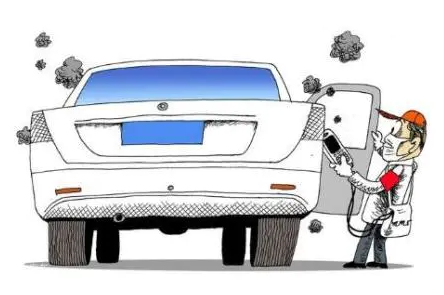
Hopcalite oxidant is mainly composed of manganese oxide and copper oxide. Its function is to oxidize carbon monoxide in the air into carbon dioxide for instrument zero adjustment. The oxidation efficiency of this oxidant should reach 100% below 100℃. To ensure its oxidation efficiency, it should be kept dry during use and storage.
The main performance indicators of the carbon monoxide infrared gas analyzer are as follows:
Measuring range: Two ranges of 0–30 ppm and 0–100 ppm
Reproducibility: ≤±0.5% of full scale
Zero drift: ≤±2% of full scale per 4h
Span drift: ≤±2% of full scale per 4h
Linear deviation: ≤±1.5% of full scale
Warm-up time: 30 min
Carbon dioxide interference: 500 ppm CO₂ ≤±2% of full scale
Pump flow rate: Approximately 500 ml/min
Response time: Time for pointer to reach 90% of full scale < 15 s
Non-analyte components in ambient air, such as methane, carbon dioxide and water vapor, can affect the determination results. However, the interference of the above non-analyte components can be largely eliminated by using a tandem infrared detector.
Since water vapor causes interference, air samples should be dried through a rubber tube before being introduced into the instrument for determination.
The instrument can perform continuous determination. Connect the air to be measured to the instrument with a polytetrafluoroethylene tube and connect a recorder to monitor the changes of carbon monoxide concentration in the air for 24 hours or for a long period.
After the instrument is started, it must be fully preheated and stabilized for more than 1 hour before sample determination; otherwise, the accuracy of the determination results will be affected.
The lower detection limit of this method is 1 ppm.
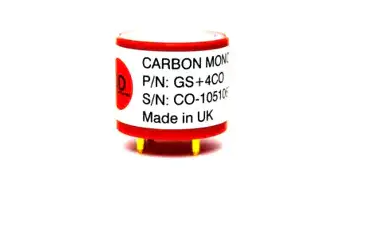
Shenzhen Wuliang Sensor Technology Co., Ltd. recommends a carbon monoxide sensor for carbon monoxide detection in vehicles.