The gas sensors available on the market are of a mixed and disorganized variety, which has led to the development of various types of gas sensors.
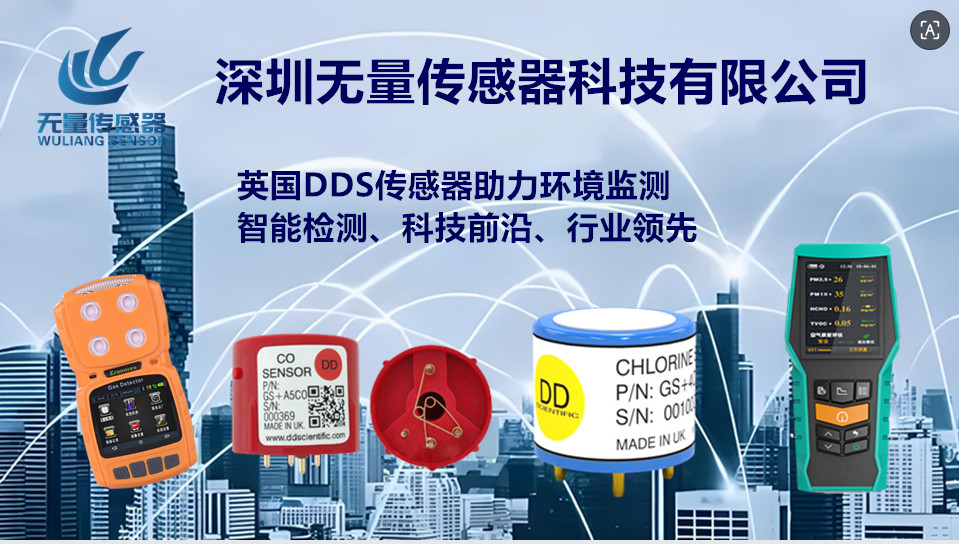
Shenzhen Wuliang Sensor Technology Co., Ltd. will introduce to you the commonly used electrochemical gas sensors and infrared gas sensors.
The main principle of an
electrochemical gas sensor is to oxidize or reduce the target gas to be measured at the electrode, measure the current generated, and thereby obtain the concentration of the target gas. Such a sensor has two to three electrodes in contact with the electrolyte, and occasionally four electrodes. The electrodes are usually made of a porous hydrophobic membrane with fixed high-surface-area precious metals. The working electrode, which is in contact with the electrolyte and exposed to the ambient air for monitoring, typically interacts with the air through a porous membrane. The most commonly used electrolyte is an inorganic acid, although organic electrolytes are also used in some sensors. When the gas diffuses into the sensor, it undergoes oxidation or reduction at the working electrode via the porous membrane. This electrochemical reaction generates a current that flows through an external circuit.
Low power consumption
High sensitivity
Good linearity
High accuracy
Light weight
Small size
An infrared gas sensor, also known as a non-dispersive infrared (NDIR) gas sensor, is a simple spectroscopic sensor commonly used as a gas detector.
The main components of an NDIR sensor (a type of infrared gas sensor) include an infrared source (lamp), a sample chamber or light tube, a filter, and an infrared detector. The gas in the sample chamber causes attenuation of infrared light at specific wavelengths; the detector measures this attenuation to determine the gas concentration. There is a filter in front of the detector, which blocks all light except for the wavelengths that can be absorbed by the target gas molecules.
Compared with electrochemical sensors, infrared gas sensors have the following advantages:
However, their disadvantages are also obvious:
High power consumption
Complex structure
High cost
These two types of sensors each have their own advantages, and the types of gases they can measure also differ slightly:
Electrochemical gas sensors are mainly used to measure the concentrations of gases such as oxygen (O₂), carbon monoxide (CO), hydrogen sulfide (H₂S), ammonia (NH₃), and chlorine (Cl₂).
Infrared gas sensors are mainly used to measure gases with large measurement ranges, such as carbon dioxide (CO₂), methane (CH₄), sulfur hexafluoride (SF₆), and other gases with stable chemical properties.