Gas Monitoring System Solution for the Petroleum and Chemical Industries
China is a major iron and steel producer, with pig iron output showing a year-on-year growth trend in recent years. At present, the total energy consumption of the iron and steel industry accounts for about 15% of the country's total industrial energy consumption, while the effective energy utilization rate in the production process of iron and steel enterprises is only about 30%. In integrated iron and steel enterprises, blast furnace ironmaking is the most energy-intensive process. Energy conservation in the iron and steel industry mainly includes two aspects: reducing waste and increasing recovery, among which vigorously recovering secondary energy generated during production (such as by-product gas) is a very important approach. The by-product gas resources generated in the iron and steel production process include blast furnace gas (BFG), coke oven gas (COG) and converter gas (CG), among which BFG emissions account for about 64%, COG about 29%, and CG about 7%. Therefore, the effective utilization of BFG is the top priority for steel mills to save energy and reduce consumption.
Blast furnace gas is a by-product gas from the blast furnace ironmaking process, a colorless, odorless, toxic low-calorific-value gaseous fuel. Its main components are CO, CO2, N2, H2O and a small amount of H2. The content of each component is closely related to the fuel used in the blast furnace, pig iron grade and smelting process, and its typical composition is shown in Table 1.
The content of CO, the key component with secondary utilization value, is only 25-30%, while the inert components CO2 and N2 account for about 70%, resulting in an extremely low calorific value of BFG, generally about 730-800×4.18 KJ/Nm³. However, the fuel calorific value needs to reach about 2200×4.18 KJ/Nm³ to meet the theoretical combustion temperature requirements of industrial furnaces.
At present, the utilization of BFG is inadequate. Most metallurgical plants face a shortage of high-calorific-value gas but a surplus of BFG, with varying degrees of BFG emission, failing to achieve the effective utilization of gas. Many integrated iron and steel enterprises emit BFG on the one hand, and on the other hand have to purchase heavy oil, natural gas or burn self-produced tar as energy supplements. The hot blast stoves of the blast furnace itself consume 40% to 50% of the BFG, and if most of the remaining gas is emitted into the atmosphere, it will cause environmental pollution and energy waste. The China Energy Conservation Technology Outline issued by the State Planning Commission, the State Economic and Trade Commission and the State Science and Technology Commission requires that the BFG emission loss rate of key metallurgical enterprises should be below 4%.
Due to the CO content in BFG being less than 30%, the combustion speed is low and the flame is long, so the theoretical combustion temperature of BFG is 1400~1500℃. BFG contains a large amount of N2 and CO2, with its main combustible components being CO, H2 and a trace amount of CH4, resulting in a low calorific value. Generally, the calorific value is 2850 kJ/m³~3220 kJ/m³ for smelting carbon steel, and 3550 kJ/m³~4200 kJ/m³ for smelting foundry iron.
In the energy consumption structure of the iron and steel industry, coal accounts for about 70%. In the thermal energy conversion of coal, 65.88% participates in smelting production in the form of coke and pulverized coal, and another 34.12% of thermal energy exists in the form of combustible gas (including BFG, CG and COG). Combustible gas contains a huge amount of thermal energy, and its rational, scientific and full utilization plays a positive role in the energy conservation work of the iron and steel industry. Compared with CG and COG, BFG has a low calorific value and a narrow application range, so many steel mills have not fully utilized it and even emit a large amount of it, which not only wastes energy but also pollutes the environment. To make full use of the surplus BFG, it is generally mixed and burned in coal-fired power boilers or small mixed gas boilers, but the total recovery volume is limited. Its comprehensive utilization has become an important development trend. Several common and practical BFG utilization technologies are introduced below.
1. Blast Furnace Hot Blast Stove
The blast furnace hot blast stove is the most widely used industrial furnace that solely uses BFG at present. Relying on the high-temperature environment formed by the large heat capacity of the refractory brick masonry in the furnace, the blast furnace hot blast stove enables the stable combustion of pure BFG. To obtain a higher hot blast temperature, it is necessary to preheat the BFG and combustion-supporting air before sending them into the hot blast stove for combustion.
2. Regenerative Rolling Mill Reheating Furnace
The High-Temperature Air Combustion (HTAC) technology of regenerative rolling mill reheating furnaces preheats both BFG and combustion-supporting air to above 1000℃, raising the theoretical combustion temperature of pure BFG to above 2200℃. The preheating of BFG and combustion-supporting air is realized through regenerators. The difference from traditional regenerative combustion lies in the use of heat storage materials that are resistant to high temperature, rapid heating and cooling to achieve high preheating temperature; the heat storage body has a large specific surface area with a commutation cycle of less than 1 minute, realizing the miniaturization of the heat storage body; and the flue gas discharge temperature is below 150℃. The efficiency of the regenerative rolling mill reheating furnace is more than 30% higher than that of conventional reheating furnaces. The furnace is in an oxygen-lean combustion atmosphere, which reduces the oxidative burning loss of steel billets and is conducive to improving the yield. The NOx content in combustion products is low, and the equipment has a high degree of automation.
3. Regenerative Coke Oven
The regenerative coke oven directly uses BFG as fuel. The BFG and combustion-supporting air are preheated to about 1000℃ through the checker bricks of the regenerator, and then enter the vertical flues of the combustion chamber for combustion, which can heat the wall of the carbonization chamber to above 1100℃.
4. Blending with High-Calorific-Value Gas to Form Mixed Fuel Gas
BFG can be blended with COG, natural gas, liquefied petroleum gas and other gases to form mixed fuel gas, which is used as fuel for soaking pits, reheating furnaces, heat treatment furnaces, etc., and can also be used for sintering machine ignition, heating hot-rolled steel ingots, preheating ladles, etc. Blending BFG with high-calorific-value gas for combustion is another important utilization method of BFG in steel mills besides direct combustion in hot blast stoves at present.
5. Blast Furnace Top Gas Pressure Recovery Turbine (TRT) Power Generation Technology
It is feasible to adopt the TRT power generation technology when the blast furnace top gas pressure is higher than 0.08 MPa. Because the power generated by the equipment is equal to its own power consumption when the gas pressure is 0.08 MPa, the gas pressure must be higher than 0.08 MPa to generate economic benefits, and the higher the gas pressure, the greater the benefits. Therefore, it is recommended that blast furnaces with a top gas pressure higher than 0.15 MPa should actively adopt this technology. The power generation per ton of iron using the TRT device is 20~40 kWh. If dry gas dust removal technology is adopted, the power generation can be increased by about 30%. On the whole, the TRT device can recover 30% of the energy required by the blast furnace blower, with considerable economic benefits, and is a major energy-saving project in the ironmaking process.
6. BFG Combined Cycle Gas Turbine (CCPP) Power Generation Technology
The application of BFG CCPP power generation technology is recognized internationally as the most valuable secondary energy utilization technology at present. The gas-to-electricity conversion efficiency of CCPP technology is as high as 40%~50% (without external heat supply), 70%~90% higher than that of conventional boiler steam power generation, and it saves about 1/3 of water. However, it has high requirements for gas quality (such as stable calorific value, pressure and gas flow, and low dust content).
A CCPP system is generally composed of a BFG supply system, a gas turbine system, a waste heat boiler system, a steam turbine system and a generator set system. Its process flow is as follows: BFG is dedusted and pressurized, then enters the gas turbine combustor for combustion, and the generated high-temperature gas drives the gas turbine turbine to do work, thereby driving the generator to generate electricity. The flue gas after doing work (at a temperature of about 540℃ and a pressure of about 5 kPa~6 kPa) enters the waste heat boiler to produce medium-pressure or sub-high-pressure steam (the typical parameters are 3.82 MPa~5.9 MPa, 450~550℃), and the steam continues to do work in the steam turbine for power generation. The extraction steam or back pressure exhaust steam of the steam turbine is used for heating and refrigeration. The CO2 emission in the flue gas of CCPP is 45%~50% lower than that of conventional thermal power plants, with no fly ash and slag emission, and the emissions of SO2 and NOx are also at a low level.
In a word, the BFG CCPP power generation technology has great advantages in high efficiency, energy conservation and environmental protection, and has a broad development prospect from a long-term perspective. It has been promoted and applied by many domestic iron and steel enterprises in recent years.
7. BFG CO Purification Technology
BFG CO purification technology adopts the pressure swing adsorption method to purify CO, the main combustible gas in BFG, and can obtain CO product gas with a concentration of 40%~99% according to actual needs. The product gas can be used as a high-calorific-value combustion gas, a reducing gas, or in chemical production, etc. It is very suitable for steel enterprises with BFG emission, as well as those in areas with tight resources such as natural gas and liquefied petroleum gas. It can help enterprises recover the effective components in BFG, realize energy conservation, emission reduction and low-carbon ironmaking.
In addition to blending BFG with CG, COG or other high-calorific-value gases in different proportions to increase its calorific value to meet the requirements of various furnaces in the iron and steel industry in terms of temperature, cleanliness, combustion speed, combustion form, etc., the popularization of regenerative combustion technology has expanded the application range of BFG, which can replace part of COG and realize more efficient utilization of BFG. Power generation is the fastest-growing utilization approach of BFG in recent years. Iron and steel enterprises should fully recover and efficiently utilize BFG to achieve zero emission of BFG and move towards the direction of purchasing less or no external electricity. In addition, CO can be extracted from BFG and used as a raw material for C1 chemical industry to synthesize many important chemical products, which is also a BFG comprehensive utilization direction with great potential.
Necessity of On-line Flue Gas Monitoring in the Iron and Steel Metallurgical Process
Facilitating Resource Reutilization and Reducing Enterprise Costs
Generally, about 2.1×10^7 kJ of energy is required to produce 1 ton of crude steel, and about 4.2×10^6 kJ of BFG, 4.2×10^6 kJ of COG and 1.0×10^4 kJ of CG can be generated at the same time. By-product gas accounts for about 30%-40% of the total energy income of iron and steel enterprises. Therefore, realizing the recovery and reutilization of by-product gas can reduce the production cost of the iron and steel metallurgical industry and realize the effective utilization of resources. The recovery value of gas depends on the concentration of energy gases such as CO in the gas, and the CO and O2 on-line monitoring system is the key to measuring gas concentration.
Ensuring the Safety of Production Operations
The CO concentration in BFG and COG is relatively high, and its explosive limit in air is 12.5%~74%. Once the concentration reaches the explosive limit, an explosion is very likely to occur when exposed to an open flame. The toxicity and explosion risk of carbon monoxide are both closely related to its concentration, so it is necessary to adopt professional technical means to conduct real-time monitoring of CO and O2 concentrations in gas.
Meeting the Requirements of Environmental Protection
At present, China has more than 20 integrated iron and steel enterprises with an annual steel output of 4-20 million tons, a considerable number of which have a BFG emission volume of 100,000-300,000 m³/h. It can be inferred from such emission volumes that metallurgical enterprises can seriously affect the air quality within several kilometers around and cause air pollution. Severe air pollution not only endangers the health of surrounding residents but also deteriorates the ecological environment. In a word, the environmental quality around metallurgical enterprises is closely related to the concentration of CO they emit.
Summary
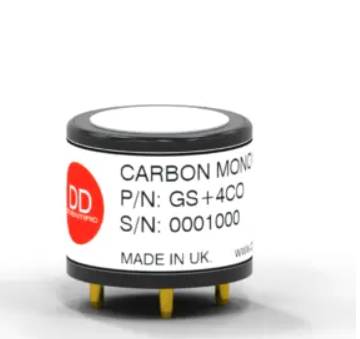
BFG is rich in CO gas and has high utilization value. Purifying CO gas in BFG, increasing the CO content from 22% (calorific value 731 Kcal/Nm³) to 70% (calorific value 2200 Kcal/Nm³) and using it as fuel gas for steel pipe processing is of great significance in energy conservation and consumption reduction. In addition, this purification technology can increase the CO concentration in BFG to more than 98.5%, which can then be used in chemical production to synthesize ethylene glycol, dimethyl carbonate, acetic acid, methanol, TDI, DMF and other chemical products. This not only realizes the resource integration of the iron and steel and chemical industries with good economic benefits but also helps reduce the overall primary energy consumption of iron and steel and chemical enterprises, thereby reducing carbon dioxide emissions, promoting industrial coupling, and driving the two industries to achieve green, low-carbon and sustainable development.
Notes
Unit specifications: KJ/Nm³ (kilojoule per normal cubic meter), kWh (kilowatt-hour), MPa (megapascal), kPa (kilopascal) are all universal industrial standard units;
Professional abbreviations: TRT (Blast Furnace Top Gas Pressure Recovery Turbine), CCPP (Combined Cycle Gas Turbine) are universal industry abbreviations, retained in the translation with Chinese definitions supplemented in the text;
Chemical products: Ethylene glycol, dimethyl carbonate, etc. are standard Chinese chemical product names with no additional translations;
The missing Chinese character in the original text is reasonably deduced and translated as "safety" in combination with the context.