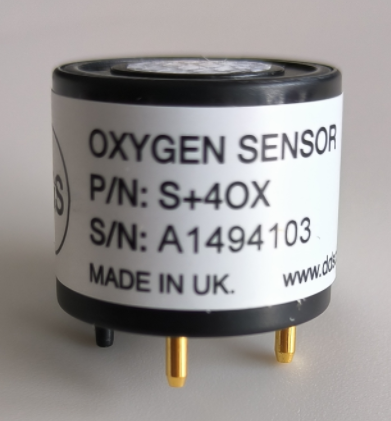
Determine the type of
sensor according to the measured object and measurement environment. To carry out a specific measurement task, the first step is to consider which principle-based sensor to adopt, and this decision can only be made after analyzing various factors. Even for measuring the same physical quantity, there are multiple types of sensors based on different principles to choose from. To determine which principle-based sensor is more suitable, the following specific issues need to be considered based on the characteristics of the measured quantity and the operating conditions of the sensor:
The range of measurement;
The requirements for the sensor's volume at the measured location;
Whether the measurement method is contact or non-contact;
The method of signal extraction (wired or non-contact measurement);
The source of the sensor (domestic or imported), whether the price is affordable, or whether it needs to be self-developed.
After considering the above issues, you can determine the type of sensor to use, and then consider the specific performance indicators of the sensor.
Typically, within the linear range of a sensor, it is desirable for the sensor to have as high a sensitivity as possible. This is because only when the sensitivity is high, the output signal value corresponding to the change in the measured quantity will be relatively large, which is conducive to signal processing. However, it should be noted that a sensor with high sensitivity is also prone to incorporating external noise unrelated to the measured quantity, and this noise will also be amplified by the amplification system, affecting the measurement accuracy. Therefore, the sensor itself is required to have a high signal-to-noise ratio to minimize the introduction of interference signals from the outside.
The sensitivity of a sensor is directional. If the measured quantity is a unidirectional vector and has high requirements for directionality, a sensor with low sensitivity in other directions should be selected; if the measured quantity is a multi-dimensional vector, the cross-sensitivity of the sensor should be as small as possible.
The frequency response characteristic of a sensor determines the frequency range of the measured quantity, and it must maintain undistorted measurement conditions within the allowable frequency range. In practice, the response of a sensor always has a certain delay, and it is desirable for this delay time to be as short as possible. A sensor with high frequency response has a wider measurable signal frequency range; however, due to the influence of structural characteristics, the mechanical system has large inertia, so sensors with low natural frequency can only measure signals with lower frequencies.
In dynamic measurement, the response characteristics should be selected according to the characteristics of the signal (steady-state, transient, random, etc.) to avoid excessive errors.
The linear range of a sensor refers to the range where the output is proportional to the input. Theoretically, within this range, the sensitivity remains a fixed value. The wider the linear range of the
sensor, the larger its measurement range, and it can ensure a certain measurement accuracy. When selecting a sensor, after determining the type of sensor, the first thing to check is whether its range meets the requirements.
In practice, however, no sensor can guarantee excellent linearity, and its linearity is relative. When the required measurement accuracy is relatively low, a sensor with small nonlinear error can be approximately regarded as linear within a certain range, which will greatly facilitate the measurement.