The concentration of carbon monoxide (CO) is one of the key indicators to determine whether a spontaneous combustion fire occurs in a coal mine. Coal mines are prone to CO poisoning accidents. For example, when a water exploration borehole is drilled in a transportation roadway of a coal mine, "dry drilling" (drilling without water injection) may cause combustion inside the borehole, releasing a large amount of CO and leading to fatal poisoning of personnel.
At present, China’s coal mine regulations clearly stipulate that real-time monitoring of CO concentration is required in locations such as main roadways, return air roadways, coal mining faces, driving faces, and goafs. An alarm must be triggered when the gas concentration reaches or exceeds a preset danger threshold. This is where carbon monoxide sensors come into play.
As we know, in many ventilated places such as catering venues and coal mining sites, it is necessary to ensure the safety of work and construction by installing flameout protection devices for gas-using equipment, mechanical air supply and exhaust systems, and gas concentration detection and alarm devices. Similar to coal mine CO poisoning accidents, combustible gas detection and alarm devices often use electrochemical gas detection elements (such as methane and carbon monoxide sensors) to monitor and early warn the concentration of surrounding combustible gases.
In addition, gas sensors are widely used in monitoring devices for toxic and combustible gas leaks. For instance, on June 22, 2016, a gas pipeline ruptured and caused natural gas leakage in a section of Donggang District, Rizhao City, Shandong Province. After diluting the gas and closing the gas valves, police officers used a combustible gas detector with a built-in gas sensor element to conduct real-time detection of the surrounding environment. The leakage was successfully handled only after confirming there was no risk of deflagration and no further gas leakage.
In general, to prevent the occurrence of the above-mentioned accidents and hidden dangers, it is essential for various enterprises to install effective combustible gas sensor monitoring devices to conduct real-time, effective monitoring and early warning of various hazardous combustible gases during daily production.
Common types of carbon monoxide sensors used in coal mines include electrochemical sensors, catalytic combustible gas sensors, and infrared absorption sensors. Currently, electrochemical carbon monoxide sensors are widely adopted.
An electrochemical carbon monoxide sensor is also a type of micro-fuel cell element. It undergoes an electrochemical redox reaction with the detected gas at a constant potential, and obtains information about the gas concentration by measuring the electric field current. Its working principle is as follows: a working electrode and a counter electrode form an electrode pair. When these two electrodes are immersed in an electrolyte, polarization occurs when a voltage is applied between them. If the working electrode is positive and the counter electrode is negative, negative ions in the electrolyte move to the working electrode, while positive ions move to the counter electrode. At this time, the detected gas diffuses to the working electrode, and an electrochemical reaction occurs under the action of a catalyst to release electric charges. This changes the potential between the working electrode and the counter electrode, generating an electric current.
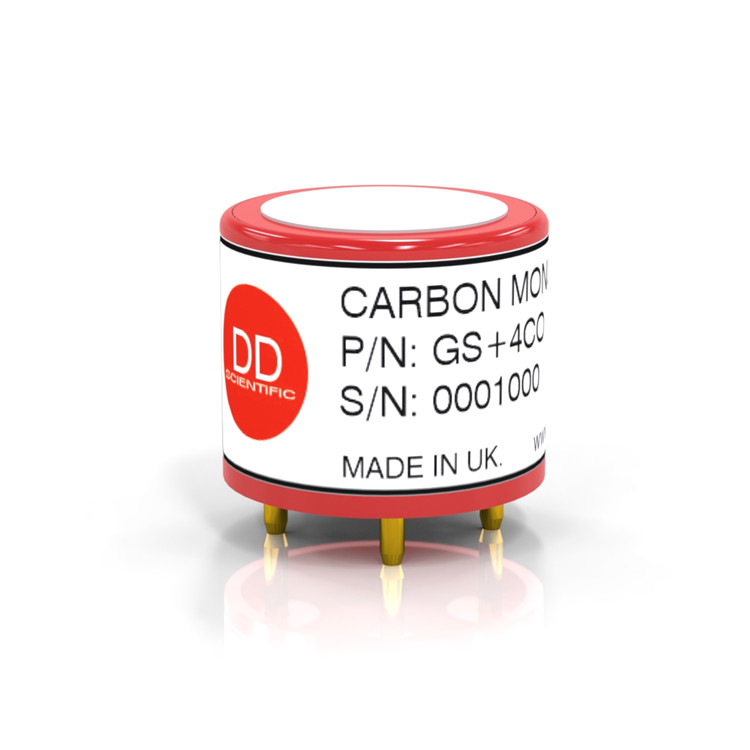
Shenzhen Yuanxin Semiconductor Co., Ltd. recommends a carbon monoxide sensor commonly used in coal mines. The CO sensor GS+4CO is based on the electrochemical principle. Electrochemical sensors have advantages such as high sensitivity and good selectivity, and are mainly used in fields such as petrochemical industry, coal mining, and general industry.