Key Points for Maintaining Sensitivity of Electrochemical CO Sensors During Operation
Key Points for Maintaining Sensitivity of Electrochemical CO Sensors During Operation
Carbon monoxide sensors are widely deployed in mines, vehicles, households and other scenarios requiring CO gas detection. Capable of continuous 24-hour monitoring of carbon monoxide concentrations on site, they transmit real-time data to monitoring platforms to track CO level changes anytime and anywhere.
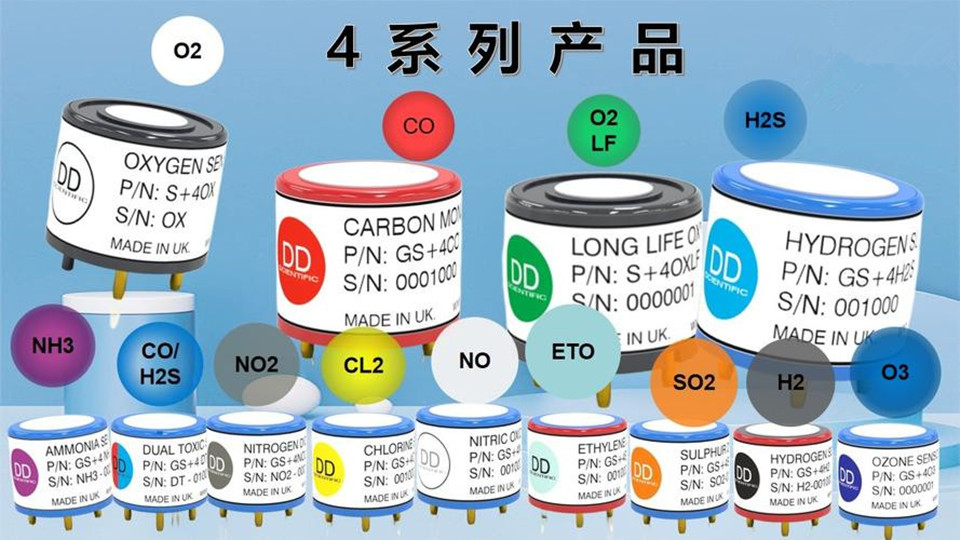
Carbon monoxide sensors, especially electrochemical carbon monoxide sensor modules, can automatically adapt to environmental variations and self-correct sensor aging curves. Featuring high sensitivity, excellent gas selectivity and strong anti-interference performance, they maintain stable detection sensitivity throughout their service life.
Working Principle of Carbon Monoxide Sensors
When carbon monoxide gas diffuses through the air holes on the housing and the gas-permeable membrane to the surface of the working electrode, oxidation of CO occurs on the working electrode under catalytic action.Hydrogen ions and electrons generated by the oxidation reaction on the working electrode migrate via the electrolyte to the counter electrode, which is spaced apart from the working electrode, and participate in reduction reactions with oxygen contained in water.A reversible oxidation-reduction reaction therefore takes place inside the sensor. This reaction persists continuously between the working electrode and the counter electrode and creates a potential difference across the electrodes.
Nevertheless, reactions occurring on both electrodes lead to electrode polarization, making it difficult to sustain a constant inter-electrode potential, which limits the detectable range of carbon monoxide concentration.A reference electrode is introduced to stabilize the inter-electrode potential. In a three-electrode electrochemical gas sensor, the output reflects potential variations between the reference electrode and the working electrode. Since the reference electrode does not engage in oxidation or reduction reactions, it maintains a constant inter-electrode potential (potentiostatic condition). Under this condition, potential changes directly correspond to variations in carbon monoxide concentration.
When the gas sensor generates an output current, the current magnitude is proportional to gas concentration. Measuring the output current via electrode leads and external circuits enables carbon monoxide concentration detection with a wide linear measurement range. By connecting signal acquisition circuits and corresponding conversion & output circuits to the gas sensor, continuous detection and monitoring of carbon monoxide can be realized.
As precision industrial electronic instruments, carbon monoxide sensors are susceptible to external environmental influences during operation, which may cause inaccurate measurement data and shorten service life.
Routine maintenance is mandatory to preserve the detection sensitivity of the sensor. The key maintenance requirements are listed below:
Installation: Mount carbon monoxide sensors away from areas with heavy smoke.
Dust Removal: Dust accumulates on the sensor surface during long-term operation and severely impairs detection sensitivity. Regular dust cleaning is required to keep the device clean.
Moisture Prevention: Humid environments degrade sensor sensitivity and may even cause detection failure. Frequently check for condensed water droplets inside the equipment and perform drying treatment promptly.
Cleaning: Do not wipe the sensor with detergents or solvents, as these may damage internal components and trigger chemical reactions with sensor materials.
Inspection: Maintenance personnel shall periodically verify whether carbon monoxide sensors operate normally to prevent alarm malfunctions.