"Lead" is one of the common heavy metals found in drinking water. It has no physiological function in the human body but tends to accumulate over the years, causing irreversible damage to the nervous system, such as delayed physical and intellectual development and poor hand-foot coordination.
The analysis and determination of oxygen are widely used in many fields including medicine, biology, industrial energy, and environmental protection. The demand for
oxygen sensors is substantial, and the market need for electrochemical oxygen sensors across various industries is roughly equivalent to the combined demand for all other types of gas sensors. Meanwhile, with the growing public awareness of health in recent years and the stringent legislation on toxic gas and pollutant emissions enacted by countries around the world, a wide range of new-type monitoring devices for gaseous oxygen or dissolved oxygen based on innovative sensing mechanisms have been increasingly adopted. Correspondingly, oxygen sensors and detection instruments featuring new principles and structures have rapidly become a research and development hotspot in the global sensor industry.
Currently, the room-temperature electrochemical oxygen sensors available on the market are lead-air galvanic cell sensors, which are imported products. As lead is a toxic substance, the EU’s Restriction of Hazardous Substances (RoHS) Directive has been enforced across the entire European Union since July 1, 2006. The directive aims to prohibit the use of heavy metals, including lead. Lead-free oxygen sensor solutions are fully compliant with the EU RoHS Directive. Therefore, lead-free conversion is an inevitable trend. Detectors manufactured with lead-free oxygen sensors can meet the requirements of the RoHS Directive, bypass the RoHS trade barrier, and facilitate access to the European market.
In view of the above two points, the development of a lead-free room-temperature electrochemical oxygen sensor is of great significance.
The
S+4OXLF is a new lead-free oxygen sensor developed by DDS of the UK, suitable for industrial and emission monitoring applications. As a high-performance oxygen sensor with a long service life and excellent repeatability, it overcomes the poor performance limitations of conventional galvanic-type oxygen sensors and complies with RoHS standards. This sensor has a measurement range of 0–30% O₂ and an operating temperature range of -40 ℃ to +60 ℃. It operates on the fuel cell principle, which is different from the traditional lead-based galvanic principle. Notably, it does not contain a consumable anode that would otherwise compromise the sensor’s lifespan. The S+4OXLF oxygen sensor has a designed service life of over 5 years and adopts the standard industrial Series 4 package.
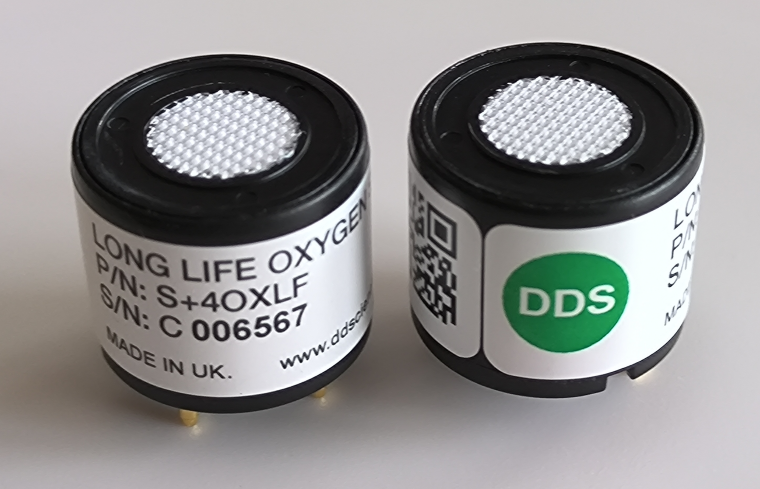
Environmentally friendly lead-free design
Fast response time of less than 10 seconds
Glitch-free design
Long service life of over 5 years