Lead is a highly toxic heavy metal that poses severe hazards to the human body. Once lead and its compounds enter the body, they can damage multiple systems including the nervous, hematopoietic, digestive, renal, and cardiovascular systems. Excessive lead levels can even lead to lead poisoning. With the rapid development of the industrial market, lead has been widely used in various industries, resulting in increasingly serious environmental pollution. Currently, lead mainly endangers human health through food, drinking water, and air. When metallic lead enters the human body, a small portion is excreted through metabolism, while the majority accumulates in the body, posing growing threats to health.
Although lead-containing oxygen sensors have a history of over 30 years, they come with inherent limitations:
Service life affected by operating environments
Operating environments typically contain acidic gases such as carbon monoxide (CO), nitrogen oxides (NOx), and sulfur dioxide (SO₂). The internal electrolyte of the sensor is alkaline solution. Over prolonged use, the pH value of the alkaline solution decreases, and the lead anode (fuel source) is consumed at an accelerated rate, thereby shortening the sensor's service life.
Non-compliance with lead-free requirements
Despite current exemptions from RoHS and WEEE directives, lead-containing sensors are being irreversibly replaced by lead-free alternatives as part of the global environmental trend.
Bulky and heavy design
Increasing the lead content is often required to extend the sensor's service life, leading to larger size and heavier weight.
The S+4OXLF lead-free oxygen sensor is a next-generation product developed by
Shenzhen Wuliang Sensor Technology Co., Ltd., primarily designed for pipeline corridor emission monitoring. It features fast response and zero recovery, pollution-free operation, and an extended service life of up to 5 years.
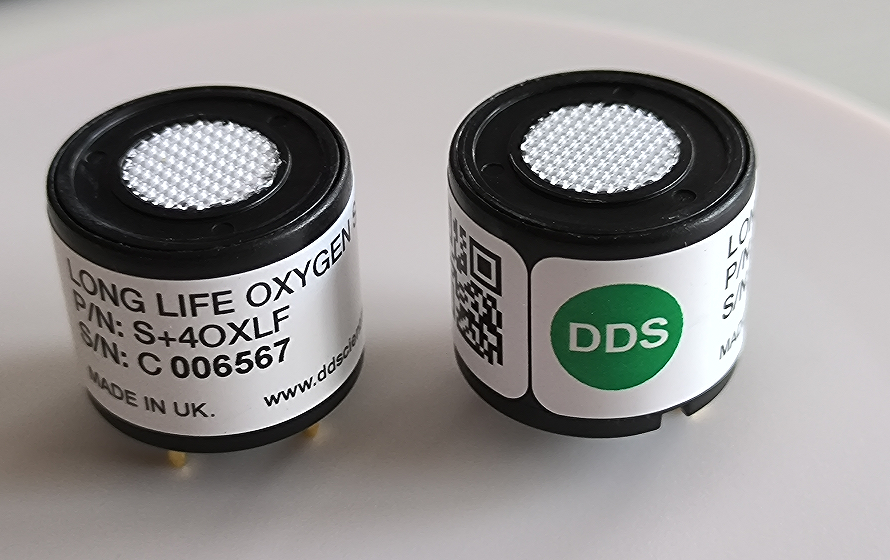
The sensor operates on the fuel cell principle, which differs fundamentally from the galvanic cell principle adopted by traditional lead-containing oxygen sensors. Unlike conventional sensors where the consumable lead anode limits service life, the S+4OXLF sensor has no such consumable component. In this design, oxygen is reduced at the working electrode, while water is electrolyzed at the counter electrode.
The core advantage of the long-life lead-free oxygen sensor is its extended service life. During operation, the high-activity electrodes only function as catalysts for oxidation-reduction reactions without any consumption. This eliminates the premature failure issue of traditional sensors caused by the depletion of the lead anode.
Package: Standard industrial Series 4 package, suitable for industrial and emission monitoring applications
Compliance: RoHS compliant
Measurement Range: 0–30% O₂
Operating Temperature Range: -40 °C to +60 °C
Lead-free design for enhanced environmental protection
Fast response time (< 10 seconds)
Glitch-free operation
Long service life (> 5 years)